Lives
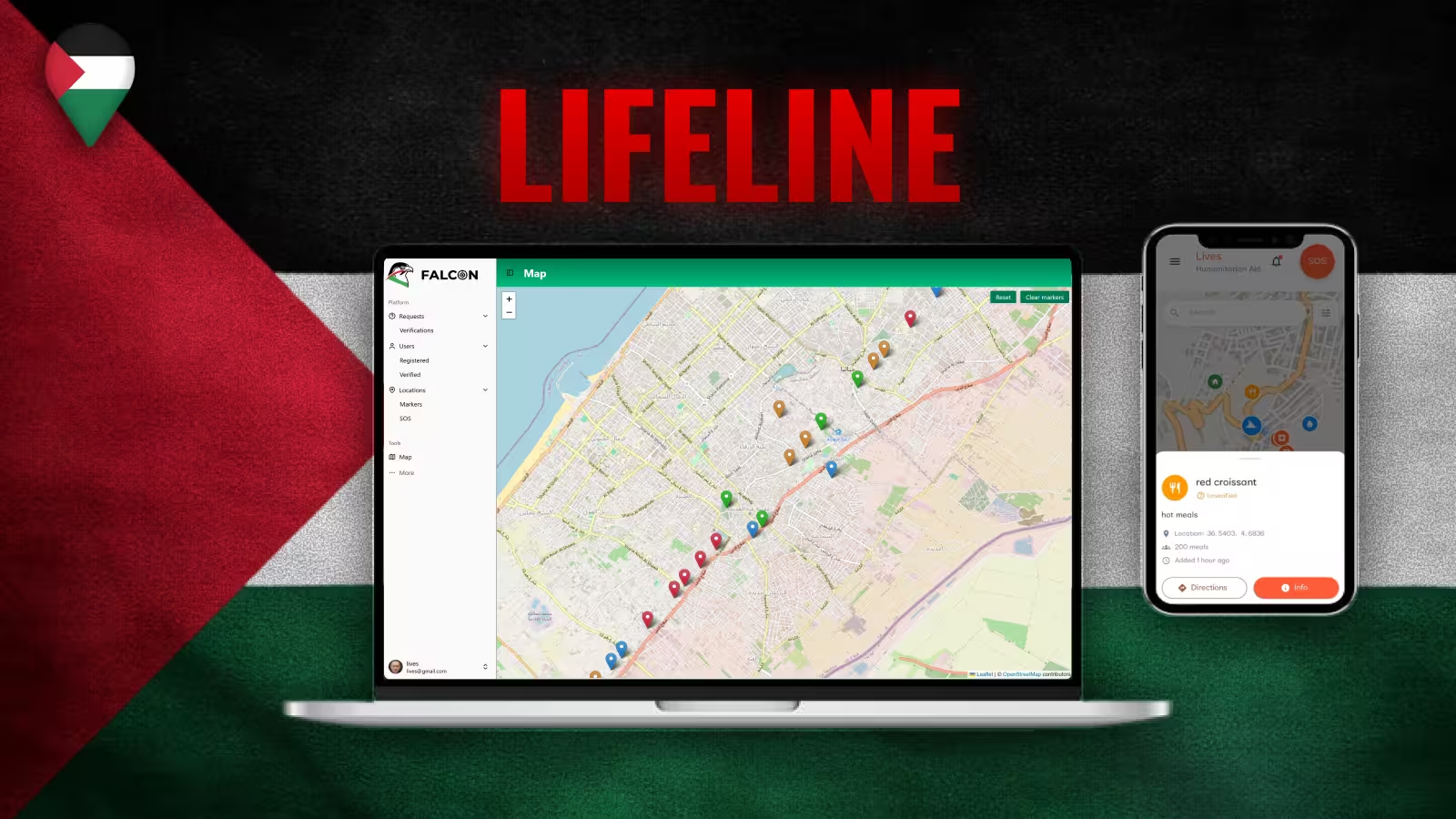
Built during the 'For Palestine' Hackathon competition hosted by the Nexus Club, this mobile and web application won 1st place out of more than 40 competitors. It is designed to assist Palestinians in low-connectivity areas by providing map-based utilities to locate critical resources, avoid danger zones, and stay safe. Despite the hackathon's heavy emphasis on AI, we intentionally opted against introducing unnecessary AI features to keep the system simple, lightweight, and offline first. The project was built using Flutter, Next.js, and Supabase.
About This Project
Providing reliable, offline first coordinates and resource locations for users in high-danger, low-connectivity zones under severe hardware and time constraints.
Developed a Next.js web application and a Flutter mobile app utilizing Google Maps API, local databases, and aggressive client-side caching without bloating the software with unnecessary AI layers.
Ranked 1st place among 40+ entries in the 'For Palestine' Hackathon, delivering a clean, highly reliable tool used for real time safety coordination.
Mobile Developer
2023
Finished
Hackathon
Technology Stack
Project Story
Providing reliable, offline first coordinates and resource locations for users in high-danger, low-connectivity zones under severe hardware and time constraints.
Developed a Next.js web application and a Flutter mobile app utilizing Google Maps API, local databases, and aggressive client-side caching without bloating the software with unnecessary AI layers.
Ranked 1st place among 40+ entries in the 'For Palestine' Hackathon, delivering a clean, highly reliable tool used for real time safety coordination.
Insights & Takeaways
Highlights
- Won 1st Place in the 'For Palestine' Hackathon among 40+ teams.
- Dual-client codebase utilizing Flutter for mobile and Next.js for web endpoints, backed by Supabase.
- Intentionally designed to be bloat-free and offline first, refusing unnecessary AI modules to ensure reliability.
Challenges
- Creating high-fidelity offline mapping workflows and resource discovery under poor connection conditions.
- Navigating the design decision to omit AI components in an AI-heavy competition, proving that practical utility beats buzzwords.
Lessons Learned
- Rejecting trending buzzwords in favor of solid offline first functionality was the correct engineering call and led directly to winning the hackathon.
Related Work
Case Study
Chef Kit
Modern multilingual cooking app offering recipe discovery, chef profiles, inventory management, favourites and push notifications, built with Flutter, Dart and Flask.
Case Study
EBEC
A full stack, highly creative web platform built for the ENSIA Business & Entrepreneurship Club, complete with an administration and user management system.
Case Study
ESCC
Dynamic official website for the ENSIA Sports & Culture Club featuring club presentation, events timeline, departments overview and team showcase.
