FanumTag
Built to organize collections containing thousands of media files with arbitrary names (images, documents, video, and audio), FanumTag is an all-in-one local desktop program. It runs 100% offline, reading and analyzing the content of every file format common to PC users. Leveraging a custom one-click Tauri installer, visual language models (VLMs), advanced OCR, and optimized C++ binary runners (like llama.cpp), the app delivers blazing-fast inference times on low-end hardware, accelerated via CUDA. Version 2.0 features a completely redesigned modern UI and major performance optimizations.
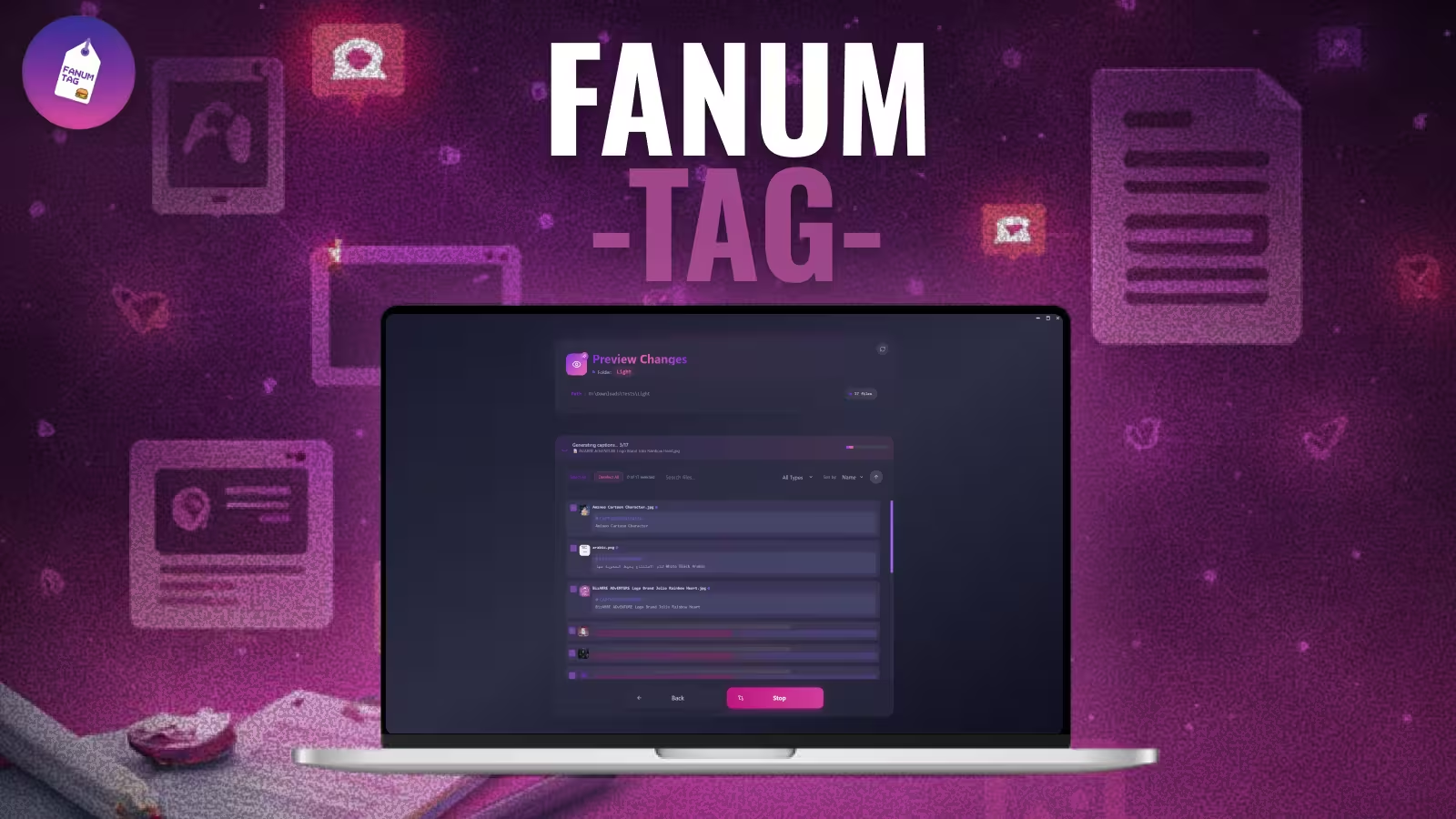
About This Project
Managing thousands of random-name media files across various formats (images, audio, video, docs) without sending private data to corporate cloud APIs.
Engineered a desktop application with a one-click Tauri installer, orchestrating local OCR, LLM, and VLM execution using llama.cpp binaries optimized for CUDA acceleration.
Flawlessly organized massive media directories offline using high-performance local inference, with Version 2.0 delivering a redesigned UI and major speed improvements.
Backend Developer
2024
Finished
Personal
Technology Stack
Project Story
Managing thousands of random-name media files across various formats (images, audio, video, docs) without sending private data to corporate cloud APIs.
Engineered a desktop application with a one-click Tauri installer, orchestrating local OCR, LLM, and VLM execution using llama.cpp binaries optimized for CUDA acceleration.
Flawlessly organized massive media directories offline using high-performance local inference, with Version 2.0 delivering a redesigned UI and major speed improvements.
Insights & Takeaways
Highlights
- Runs 100% offline, parsing images, documents, audio, and video files locally.
- Version 2.0 overhaul introducing a sleek modern UI and enhanced model inference.
- Uses llama.cpp and highly optimized local models accelerated by CUDA.
Challenges
- Orchestrating separately compiled binary runners (like llama.cpp) and CUDA environments directly within a native Tauri app.
- Achieving rapid local model inference times for file analysis on low end hardware.
Lessons Learned
- Proved that compiling and running optimized model runtimes (like llama.cpp) locally can achieve near-instantaneous inference speeds on desktop hardware when using hardware acceleration.
Related Work
Case Study
Auto Shutdown
Rust + React desktop app to automate PC shutdowns by timer, schedule or idle state.
Case Study
Azkari
Lightweight desktop app that displays Azkar reminders based on time of day, built with Tauri, SolidJS, TypeScript and Rust.
Case Study
EBEC
A full stack, highly creative web platform built for the ENSIA Business & Entrepreneurship Club, complete with an administration and user management system.
